 (+220) 385-7732

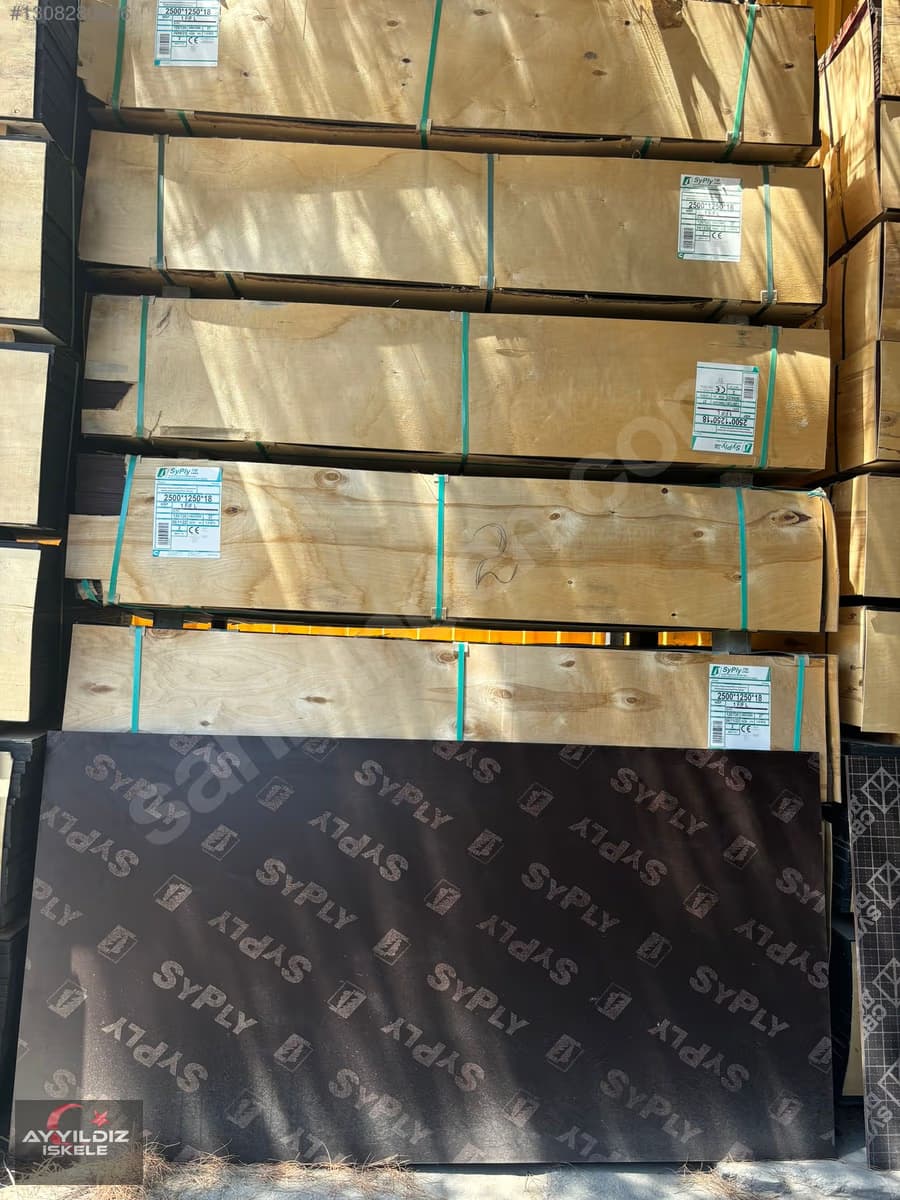
We rent and sell formwork plywood, the coated boards you build moulds from to hold wet concrete in shape. Ours is birch with a hard brown coating on both faces, 1250 by 2500 mm, 18 to 21 mm thick, at D24 per sheet per day. The company that makes this type of board says you should get 20 to 80 pours out of one sheet, and that the difference comes down to how it is handled on site.
Twenty pours or eighty, from the same board. That is a four-fold difference in what your formwork costs you, and it is decided entirely by handling.
What we supply
| Board | Birch plywood, hard coating on both faces |
| Size | 1250 × 2500 mm |
| Thickness | 18 to 21 mm |
| Price | D24 per sheet, per day |
| Also available | To buy outright |
| Where to collect | Lamin Daranka · Jabang · Yarambamba ( OIC Road ) · Bijilo ( OIC Road ) · Jambanjelly |
More on the plywood page, and the rest under building materials.
How many pours should you expect?
UPM make WISA-Form Birch, one of the standard boards of this type. Their technical sheet gives a figure.1
Typical number of reuses is likely to be in the range of 20 – 80 times. However, this will vary according to many different factors including good site practice, required concrete finish, amount of care taken when compacting the concrete, handling and storage of the forms, type and quality of release agent.
Read their list again. Every single item is something your crew does. None of it is about the board.
The coating is the whole thing
The brown surface on both faces is a hard resin coating. It does two jobs: concrete will not stick to it, and water cannot get into the wood underneath.
Keep that coating intact and the board keeps working. Break it and water gets into the timber, the layers swell apart, and the sheet is finished.
The edges have no coating
This is the one people miss. UPM list the faces and the edges separately: the faces get the resin film, the edges get water resistant paint.1
So the moment you cut a sheet, you have opened bare wood with nothing protecting it. Water goes straight in at that cut.
Oil it before every pour
Release agent is the oil you brush on so concrete lets go cleanly. UPM's instruction is not that it helps. It is that panels should be oiled before each and every use, whatever the storage conditions and however long since the last pour.1
How much to use comes from whoever supplies the oil, not from us.1 Too little and the concrete grips. Too much and it bleeds into the concrete face and stains it.
Clean it while the concrete is still soft
Concrete left on a board overnight goes hard. Then it needs a steel scraper, and the steel scraper takes the coating off with it. Clean at the moment you strike the forms, with a plastic or wooden scraper and water.
UPM also list how you vibrate the concrete as a factor in reuse count.1 A vibrator dragged against the face damages the coating. The American Concrete Institute separately warns that pushing vibrators in at random angles leaves the bottom of the pour under-vibrated.2
Storing them
Flat, off the ground, coated faces together, covered. Sheets stood on their edge against a wall bend within days, and a bent board gives you a bent wall.
Rent or buy?
Rent if it is one job, or if you have nowhere dry to keep boards afterwards. Buy if you have pours running across several projects, covered storage, and a crew that will seal edges and clean properly.
Tell us how many pours you have coming and we will price it both ways. WhatsApp (+220) 385-7732.
Common questions
- How many times can formwork plywood be reused?
- UPM, who make WISA-Form Birch, say the typical number of reuses is likely to be in the range of 20 to 80 times. They attribute the variation to site practice, the concrete finish required, care taken when compacting the concrete, handling and storage, and the type and quality of release agent.
- Why do you have to paint the cut edges of formwork plywood?
- Because the edges are not covered by the coating. UPM treat the faces with a resin film and seal the edges separately with water resistant paint. Any cut exposes bare timber, so water gets into the board and the layers swell apart. Repaint every cut edge before use.
- How often should you oil formwork plywood?
- UPM say panels should be oiled before each and every use, regardless of storage conditions or how long it has been since the last pour. Application rate should follow the instructions of whoever supplies the release agent.
- How should you clean formwork plywood?
- At the moment you strike the forms, while the concrete residue is still soft, using a plastic or wooden scraper and water. Once it hardens you need a steel scraper, which removes the coating and shortens the board's life.
- What size is the formwork plywood GLS Rental supplies?
- 1250 by 2500 mm, 18 to 21 mm thick, birch with a coating on both faces, at D24 per sheet per day. It is also available to buy outright.
Sources
Every technical figure above comes from one of these. We quote and summarise them; we do not add guidance of our own.
1. UPM Plywood, WISA-Form Birch Technical Fact Sheet
Cited for: The 20 to 80 reuse range and what drives it, the resin film on the faces, water resistant paint on the edges, and oiling before every use.
2. American Concrete Institute, Guide for Consolidation of Concrete (ACI 309R-96)
Cited for: That inserting vibrators at random angles leaves the lower part of a pour under-vibrated (section 7.6.1).
Tell us what you are building
Send your dates and a photo of the site or the drawing. We will work out what you need and what it costs.