 (+220) 385-7732

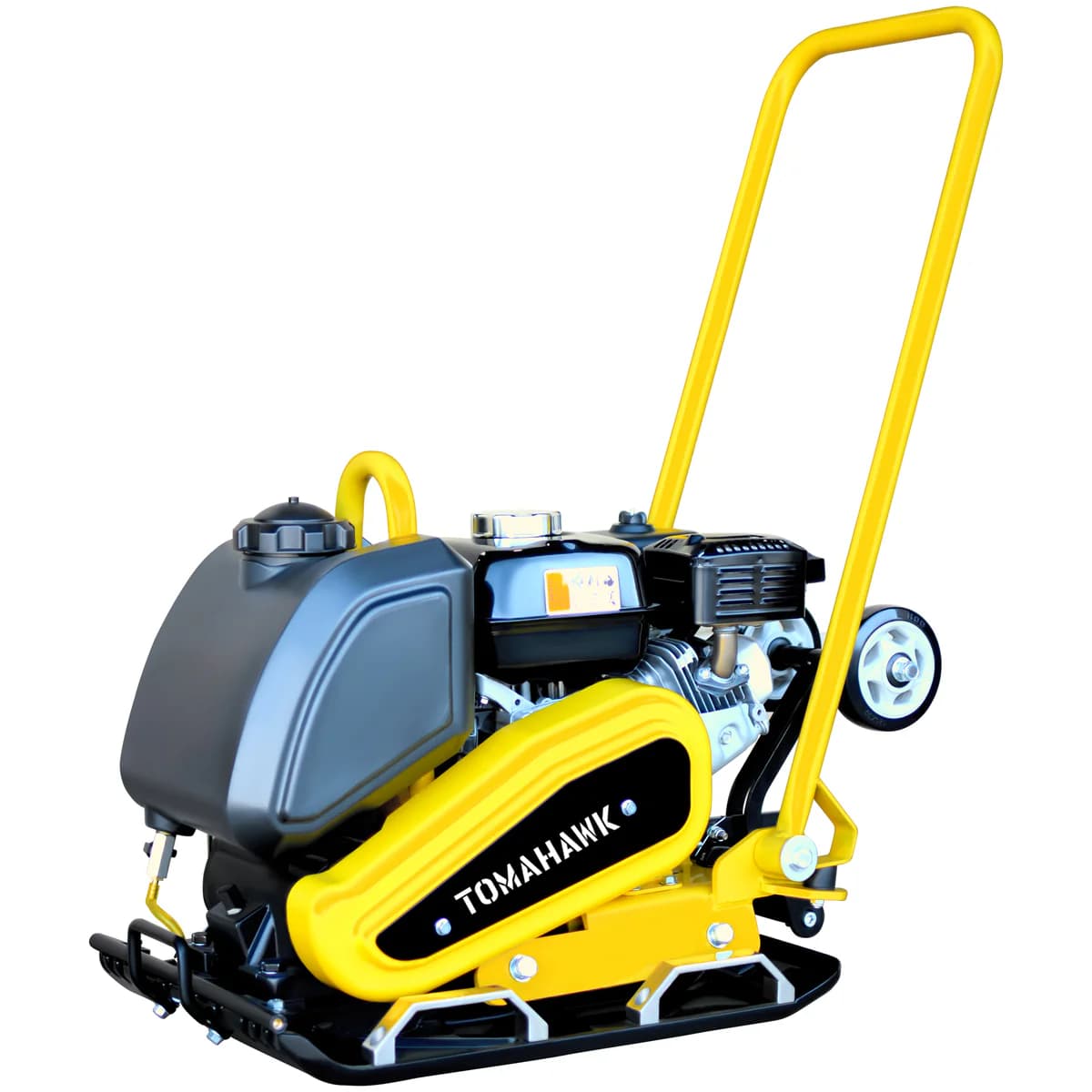
We rent a Honda-powered plate compactor at D30 per metre. It is the machine you run over loose ground to pack it down solid before you build on it. It is built for sand and gravel. If your ground is heavy clay, the manufacturer says a different machine does a better job, and we would rather tell you that before you take ours.
Loose ground settles. If it settles under a slab, the slab cracks. Packing it down first is what stops that.
What we rent
| Machine | Plate compactor, Honda petrol engine |
| Good for | Sand, gravel, asphalt |
| Not ideal for | Heavy clay — see below |
| Price | D30 per metre |
| Where to collect | Lamin Daranka · Jabang · Yarambamba ( OIC Road ) · Bijilo ( OIC Road ) · Jambanjelly |
Specification on the compactor page.
Is this the right machine for your ground?
There are two common types and they suit different ground. Multiquip, who manufacture this equipment, explain the split.
A plate presses down fast and light, many times a second. That works on loose, grainy ground where the job is to shake the particles into a tighter arrangement. Multiquip describe plates as designed to compact granular soils and asphalt — granular meaning sand and gravel.1
A rammer hits harder and slower. Multiquip say the high impact force makes it an excellent choice for cohesive soils — cohesive meaning clay, the sticky ground that holds together in a lump.1
So: sandy or gravelly ground, our plate is right. Heavy clay, and you want a rammer instead. Tell us what you have and we will say honestly whether our machine suits it.
Do the ground in layers, not all at once
This is the mistake that wastes a rental. If you fill a deep hole in one go and run the machine over the top, the surface goes hard and the bottom stays loose. Multiquip explain why.1
As the machine hits the soil, the impact travels to the hard surface below and then returns upward. This sets all particles in motion and compaction takes place.
The force has to reach something solid and bounce back. That is what does the packing. If the loose layer is too deep, the force never reaches the bottom of it.
If the lift is too deep, the machine will take longer to compact the soil and a layer within the lift will not be compacted.
A "lift" just means one layer of fill. So fill in shallow layers, compact each one, then add the next. It feels slower. It is the only way the bottom actually gets packed.
Wet or dry ground
Ground packs best at a certain dampness. Too dry and the particles will not slide into place. Too wet and the water takes the load instead of the soil, so it springs back as soon as you move on.
They point out this saves money as well as time, because ground at the right dampness takes less work to pack.1
Do not just keep going over it
When ground will not firm up, the instinct is more passes. Multiquip warn against it: too many passes over-compacts the soil, which they compare to hitting concrete with a sledgehammer over and over. Cracks appear and the density actually drops.1
It also wears the machine and burns your hours. If it is not firming up, the problem is usually the layer depth or the dampness, not the number of passes.
One correction
Our machine has a water tank, and we have previously suggested it is for wetting the ground. It is not. Multiquip say plates used on asphalt have a water tank and sprinkler to stop the asphalt sticking to the bottom of the plate.1 For soil, you manage dampness by watering or drying the fill itself.
What to tell us when you order
- That you need a plate compactor.
- Your ground type — sandy, gravelly, or clay.
- How many days you need it for.
WhatsApp (+220) 385-7732. What goes on top of the packed ground is covered on the membrane page.
Common questions
- How much does it cost to rent a plate compactor in The Gambia?
- D30 per metre from GLS Rental. It is a Honda-powered plate compactor suited to sand, gravel and asphalt, available from five branches with delivery quoted on distance.
- Is a plate compactor right for clay ground?
- Not ideally. Multiquip say plates are designed to compact granular soils, meaning sand and gravel, while rammers deliver a high impact force that makes them an excellent choice for cohesive soils such as clay.
- Why do you have to compact ground in layers?
- Multiquip explain that the machine's force travels down to the hard surface below and bounces back up, and that bounce is what packs the soil. They state that if the layer is too deep, a layer within it will not be compacted at all, even though the surface feels solid.
- How do you tell if ground is too wet to compact?
- Multiquip's hand test: squeeze a handful and open your hand. Powdery or shattering when dropped means too dry. Holding its shape and breaking into a couple of pieces means it is right. Sticky, leaving damp on your fingers and staying in one piece means too wet.
- Can you compact ground too much?
- Yes. Multiquip say too many passes over-compacts soil, comparing it to repeatedly hitting concrete with a sledgehammer, and that cracks appear which reduce the density. It also wastes time and wears the machine.
- What is the water tank on the compactor for?
- Multiquip say plates used on asphalt have a water tank and sprinkler system to stop asphalt sticking to the bottom of the plate. It is not for wetting soil.
Sources
Every technical figure above comes from one of these. We quote and summarise them; we do not add guidance of our own.
1. Multiquip Inc., Soil Compaction Handbook
Cited for: Which machine suits which ground, how compaction force travels, what happens when a layer is too deep, the hand test for dampness, over-compaction from too many passes, and what the water tank is for.
Tell us what you are building
Send your dates and a photo of the site or the drawing. We will work out what you need and what it costs.