 (+220) 385-7732

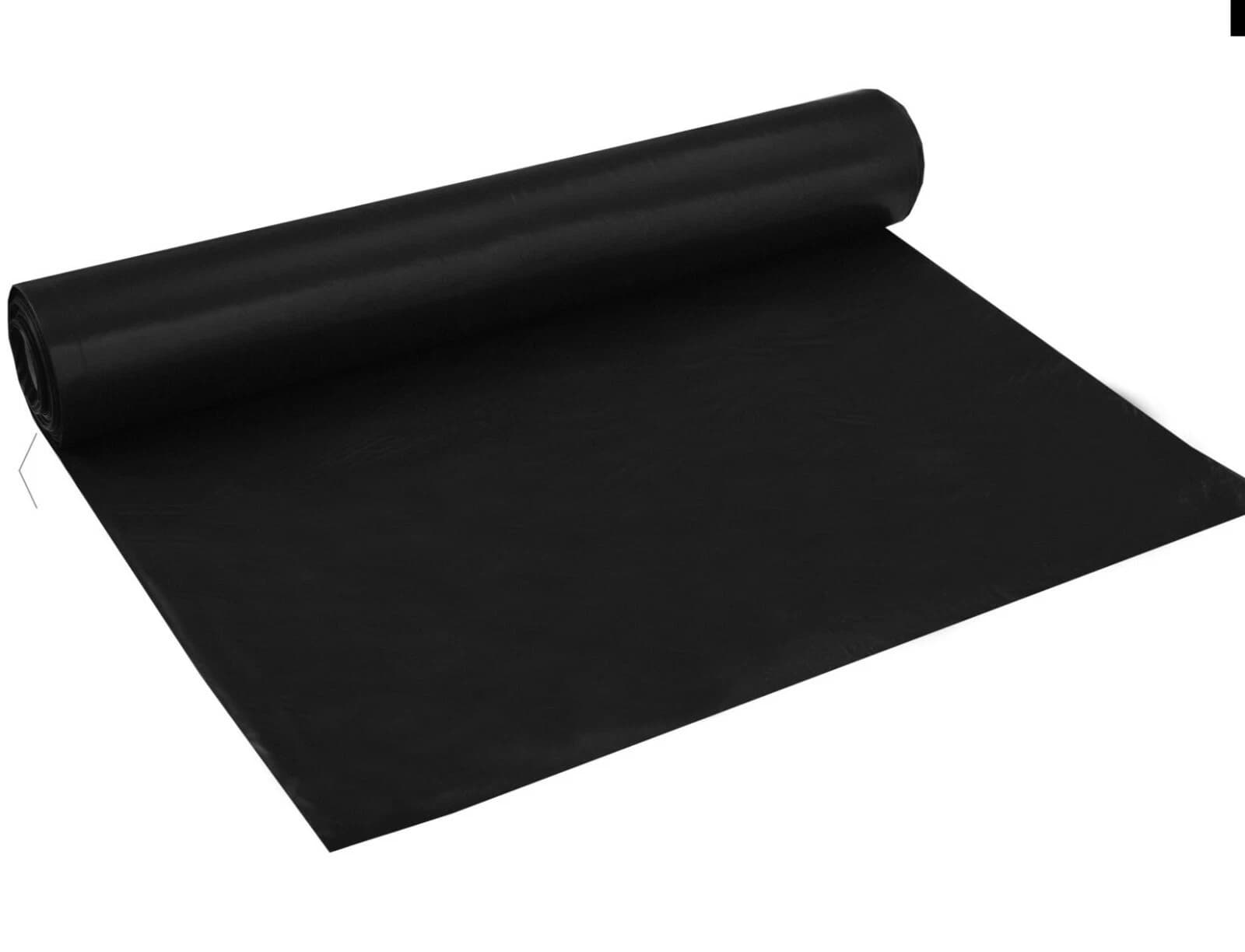
We sell heavy plastic sheeting, usually called damp proofing membrane or DPM. It costs D80 per metre, or D13,900 for a full box that covers 185.62 square metres. It does three jobs on a site: it goes under a slab to stop damp rising into it, over fresh concrete to stop it drying out too fast, and over your cement and blocks to keep the rain off.
One material, three uses. Here is what we sell and how to work out how much you need.
What we sell
| Thickness | 6 mil (a mil is one thousandth of an inch) |
| Price per metre | D80 |
| Price per box | D13,900 |
| What a box holds | 6.09 m × 30.48 m, which is 185.62 square metres |
| Where to collect | Lamin Daranka · Jabang · Yarambamba ( OIC Road ) · Bijilo ( OIC Road ) · Jambanjelly |
More on the membrane page, and the rest of what we stock under building materials.
Job one: under the slab
Ground holds water. Without a barrier, that water slowly moves up into your concrete floor and then into the building. You lay the sheeting on the prepared ground before the concrete goes down, overlapping where sheets meet and turning it up at the edges.
Sold by the metre for this, at D80.
Job two: covering fresh concrete
Concrete needs to stay damp while it hardens. If it dries out early it stops getting stronger. This is where the thickness matters, because there is a published minimum.
The National Ready Mixed Concrete Association, a US industry body, set the standard for plastic used to cover concrete.1
Plastic film should conform to ASTM C171, be at least 4 mils (0.10 mm) thick.
Ours is 6 mil — 50% thicker than their minimum, which matters because thin sheeting tears on site and a torn cover is not covering anything.
How long do you leave it on? They say at least 3 to 7 days.1 That is the number to use when you work out how much you need to buy.
How they say to lay it
- Put it straight onto the concrete as soon as you can do so without marking the surface.
- Overlap the edges where two sheets meet, tape them, and weigh them down.
- Run the sheet past the edge of the slab by at least twice the slab's thickness. So a 150 mm slab needs 300 mm of overhang.
- Use white sheeting in hot sun. It reflects heat. Clear and black sheeting absorbs it, which suits cooler or shaded work.
- Wrinkles in the sheet leave dark blotches on the concrete underneath, so skip plastic curing on a slab that will stay exposed and visible — like a polished or decorative floor. It is fine on a slab that will later be covered by tile, screed, or fill.
All of that is NRMCA's guidance, not ours.1
Why bother covering it at all
Because of this.1
Concrete in a dry environment can lose as much as 50 percent of its potential strength compared that which is moist cured.
Half the strength. Same cement, same mix, same everything else. The only difference is whether it was kept damp while it hardened.
Job three: keeping the rain off
The third use is the simplest. Cement that gets damp goes hard in the bag and is wasted. Blocks that soak through behave differently when you lay them. Covering your stack costs a few metres of sheeting.
Working out how much to buy
One box covers 185.62 square metres. On most house builds that is the slab plus a block stack plus a cement store, with some left over.
If you need less than a box, we sell it by the metre at D80. Send us your slab size on WhatsApp (+220) 385-7732 and we will tell you which works out cheaper.
Common questions
- How much does damp proofing membrane cost in The Gambia?
- D80 per metre from GLS Rental, or D13,900 for a full box. A box measures 6.09 m by 30.48 m and covers 185.62 square metres.
- How thick should plastic sheeting be for covering concrete?
- The National Ready Mixed Concrete Association say plastic film should conform to ASTM C171 and be at least 4 mils thick, which is 0.10 mm. GLS Rental's membrane is 6 mil, above that minimum.
- What is a mil?
- One thousandth of an inch. A 6 mil sheet is six thousandths of an inch thick, or about 0.15 mm.
- How long should you keep concrete covered?
- NRMCA say curing should continue as required by the specification, or for at least 3 to 7 days.
- How far past the slab edge should the sheet go?
- NRMCA say sheets should extend beyond the edge of the slab by at least twice the slab thickness. For a 150 mm slab, that is 300 mm of overhang.
- Can the same sheeting go under the slab and over it?
- Yes. The same 6 mil membrane is used under slabs to stop damp rising, over fresh concrete to keep it from drying out, and over cement and blocks to keep rain off.
Sources
Every technical figure above comes from one of these. We quote and summarise them; we do not add guidance of our own.
1. National Ready Mixed Concrete Association, Concrete in Practice 11: Curing In-Place Concrete
Cited for: The ASTM C171 standard and 4 mil minimum thickness, how to lay sheeting, white sheeting in warm weather, the 3 to 7 day period, and the 50 percent strength loss when concrete dries out.
Tell us what you are building
Send your dates and a photo of the site or the drawing. We will work out what you need and what it costs.